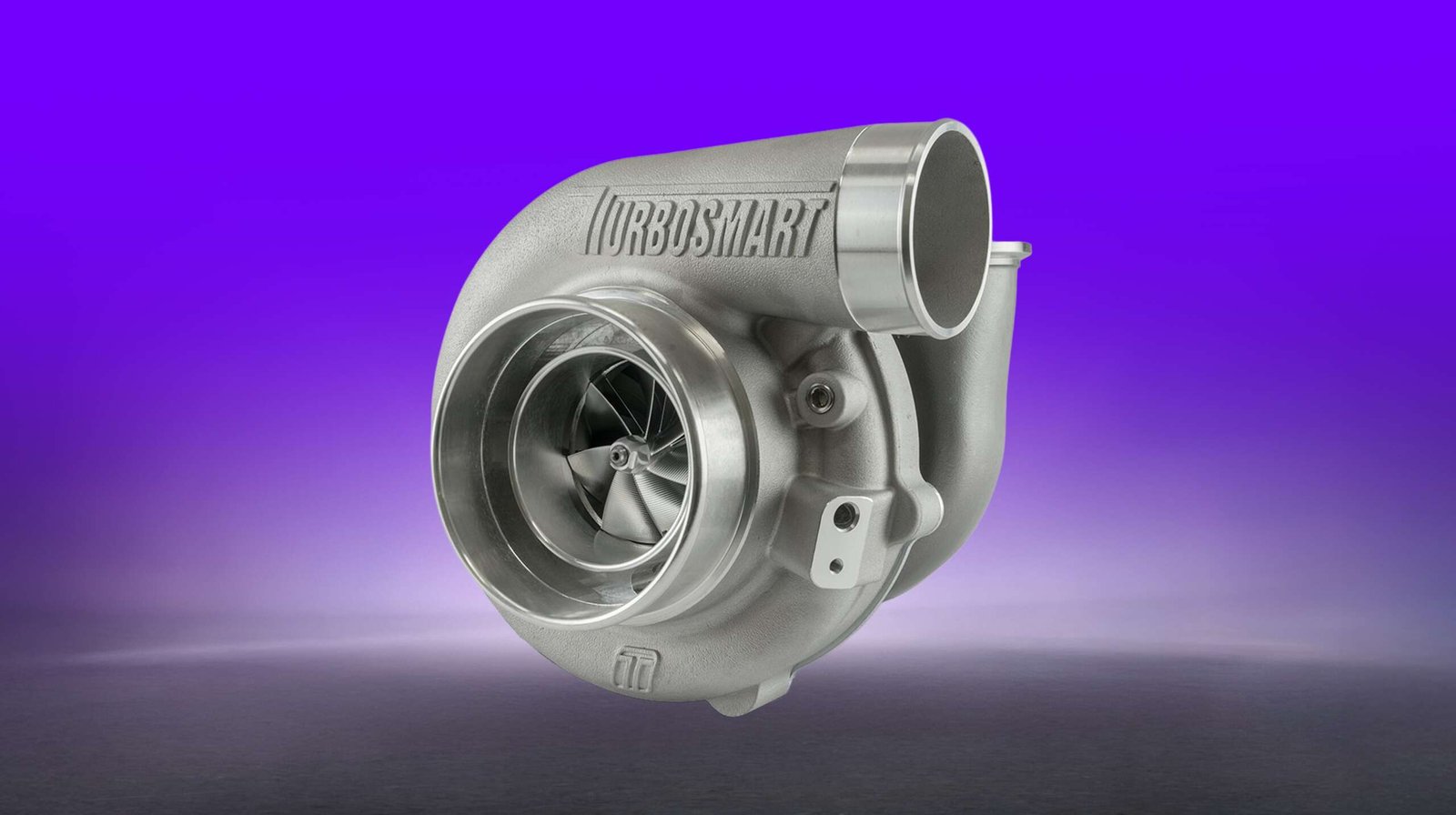
The internal combustion engine has evolved dramatically over its long history, but few innovations have revolutionized its power and efficiency as much as the turbocharger. For decades, this relatively compact device has been transforming ordinary engines into powerhouses, allowing smaller, more efficient engines to outperform their larger, naturally aspirated counterparts. At its core, a turbo is a masterpiece of engineering that leverages an engine’s own waste energy that is its exhaust gases, to create a forced induction system that dramatically increases horsepower and torque. But how does this elegant system turn exhaust into a surge of performance? The answer lies in a symphony of moving parts and thermodynamic principles working in perfect harmony.
The basic components: A tale of two wheels
A turbocharger is composed of two primary sections: the hot side and the cold side, linked by a central shaft.
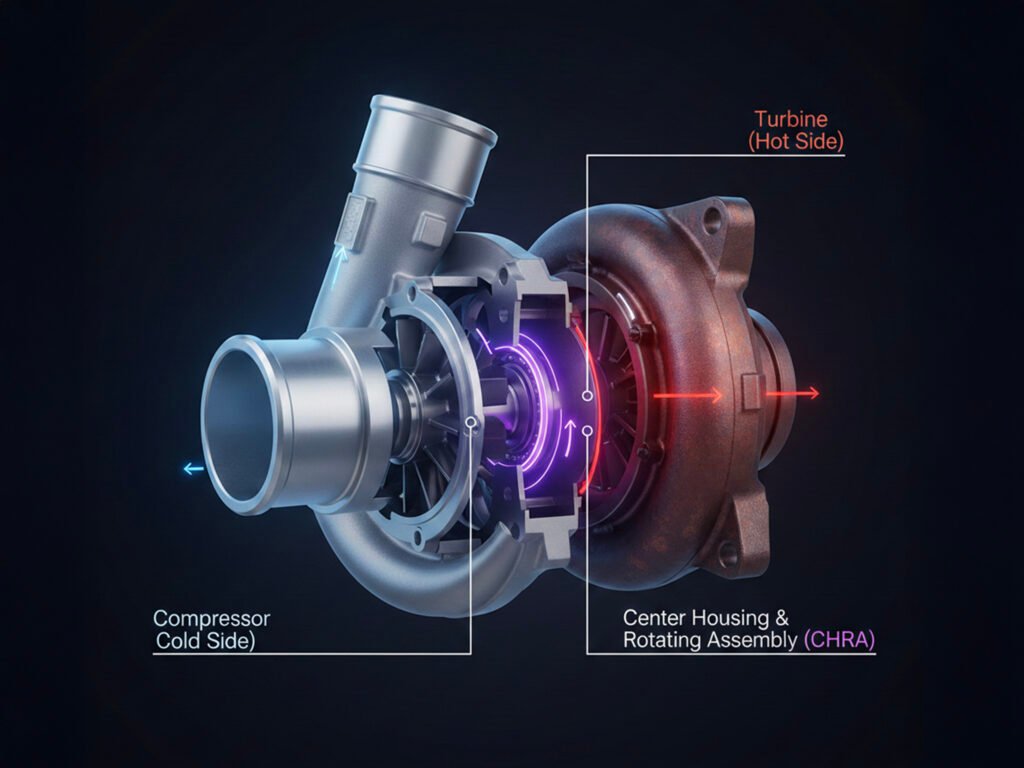
The Turbine (Hot Side):
Located on the engine’s exhaust path, this section is home to the turbine wheel and its housing. When the engine’s hot, high-pressure exhaust gases leave the cylinders, they are routed through the turbine housing. The gas is directed against the blades of the turbine wheel, causing it to spin at incredible speeds, often exceeding 150,000 revolutions per minute (RPM). This is the heart of the turbo—using what would otherwise be wasted energy to create rotational force.
The Compressor (Cold Side):
Attached to the same shaft as the turbine is the compressor wheel, housed in its own snail-shaped casing. As the exhaust gases spin the turbine, the compressor wheel spins in unison. The compressor wheel, a different shape from the turbine, acts like a fan, drawing in fresh, cool air from the outside atmosphere.
The Center Housing
and Rotating Assembly (CHRA):
The CHRA is the core of the turbo, holding the shaft that connects the turbine and compressor wheels. This crucial component also houses the high-tech bearing system, which allows the shaft to spin with minimal friction at blistering speeds. Since the turbo operates at extremely high temperatures and RPMs, this bearing system requires a constant supply of engine oil for lubrication and cooling, highlighting the importance of regular maintenance.
The journey of the air
The path of the air and exhaust through a turbocharged system is a continuous loop of energy recycling.
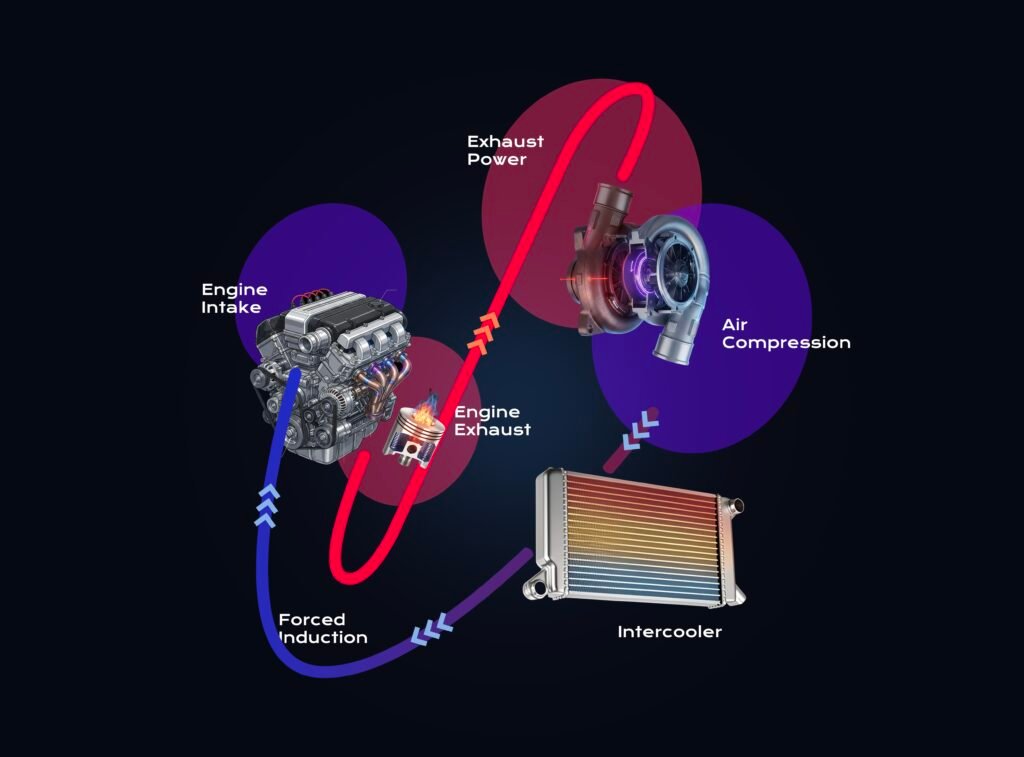
1. Exhaust Power
The process begins with the engine’s exhaust cycle. After combustion in the cylinders, the spent gases are forced out. Instead of heading straight for the tailpipe, they first encounter the turbine, spinning it powerfully.
2. Air Compression
The rotating turbine powers the compressor, which begins to suck in and compress the ambient air. As the compressor wheel spins, it accelerates the air, pushing it outward and building pressure.
3. The Intercooler
Compressing air causes its temperature to rise significantly. This is a problem because hot air is less dense and contains fewer oxygen molecules than cooler air. For optimal combustion, you want the densest possible air charge. To fix this, the hot, compressed air is routed through an intercooler, or charge-air cooler. The intercooler acts like a radiator, using either air or a separate water circuit to cool the compressed air before it enters the engine.
4. Forced Induction
The now-cooled and pressurized air, packed with a high concentration of oxygen molecules, is sent into the engine’s intake manifold and combustion chambers. This process, known as forced induction, provides the engine with a denser air charge than it would ever get from atmospheric pressure alone.
5. Combustion and Boost:
With this dense, oxygen-rich air, the engine’s computer can inject a precisely calibrated amount of extra fuel. The result is a much more powerful and complete combustion event within the cylinder. The extra pressure created inside the intake manifold by the turbo is known as “boost,” and it is the key to unlocking significantly more horsepower from the engine.
Managing the pressure: Wastegates and blow-off valves
The immense speeds and pressures generated by a turbo require careful management to prevent engine damage. This is where components like the wastegate and blow-off valve come in.
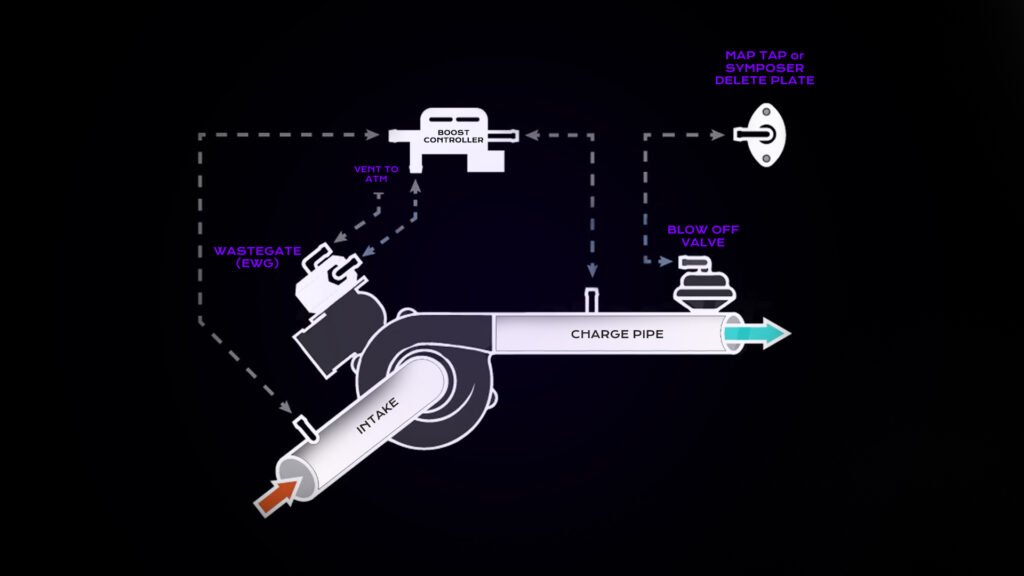
• Wastegate:
To regulate the maximum boost pressure, a wastegate is installed on the exhaust side of the turbo. When boost reaches a pre-determined level, the wastegate opens, diverting some of the exhaust gas away from the turbine. This prevents the turbo from over-spinning and creating excessive pressure that could be destructive to the engine.
• Blow-off Valve (or Bypass Valve):
When the driver suddenly lifts their foot off the accelerator, the engine’s throttle plate closes. This creates a sudden spike in pressure in the intake system, as the still-spinning turbo continues to pump air. The blow-off valve detects this spike and vents the excess pressure, often with a characteristic “whoosh” sound. This prevents the pressure from traveling backward through the turbo, which can cause damage.
Beyond the basics: Turbo advantages and evolution
The fundamental principle of turbocharging offers a dual benefit of increased power and improved efficiency. By using smaller engines, manufacturers can reduce a vehicle’s overall weight and displacement, leading to better fuel economy during normal driving. The turbo only engages under load, providing power when needed without a constant parasitic drain on the engine, unlike a mechanically-driven supercharger.
Over the years, turbo technology has continued to advance. Engineers have developed twin-scroll turbos to reduce “turbo lag” the delay between pressing the gas pedal and feeling the boost. More recently, electric turbos have been developed to eliminate lag entirely by using an electric motor to spin the compressor at low RPMs. Whether in a high-performance sports car or an eco-friendly sedan, the turbocharger remains a brilliant testament to reusing and repurposing energy to create a more exhilarating and efficient driving experience.